Konnichiwa, language lovers! 👋
Did you know the Japanese language has been shaped by prehistoric tribes, samurai warriors, Buddhist monks, and even Portuguese bread? (Yes, bread!)
In this blog post, and in our companion YouTube video, we’re packing 2,000 years of Japanese language history into a quick but fascinating journey.
Buckle up: from ancient pottery to the world’s first novel, to anime and global pop culture, the Japanese language has one epic story to tell.
Prehistoric Beginnings: Jōmon and Yayoi Roots
Let’s rewind way back. The Jōmon people (10,000 BCE) were Japan’s earliest known inhabitants. They hunted, gathered, and made stunning pottery with rope-like designs, some of the oldest in the world!
Then came the Yayoi (around 300 BCE), sailing in from mainland Asia with rice farming, metal tools, and new cultural practices.
When these two groups mingled, their languages did too — giving rise to proto-Japonic, the mysterious ancestor of today’s Japanese language and the Ryukyuan languages still spoken in Okinawa. Sadly, proto-Japonic itself never made it to paper. It was purely oral, passed down voice to voice.
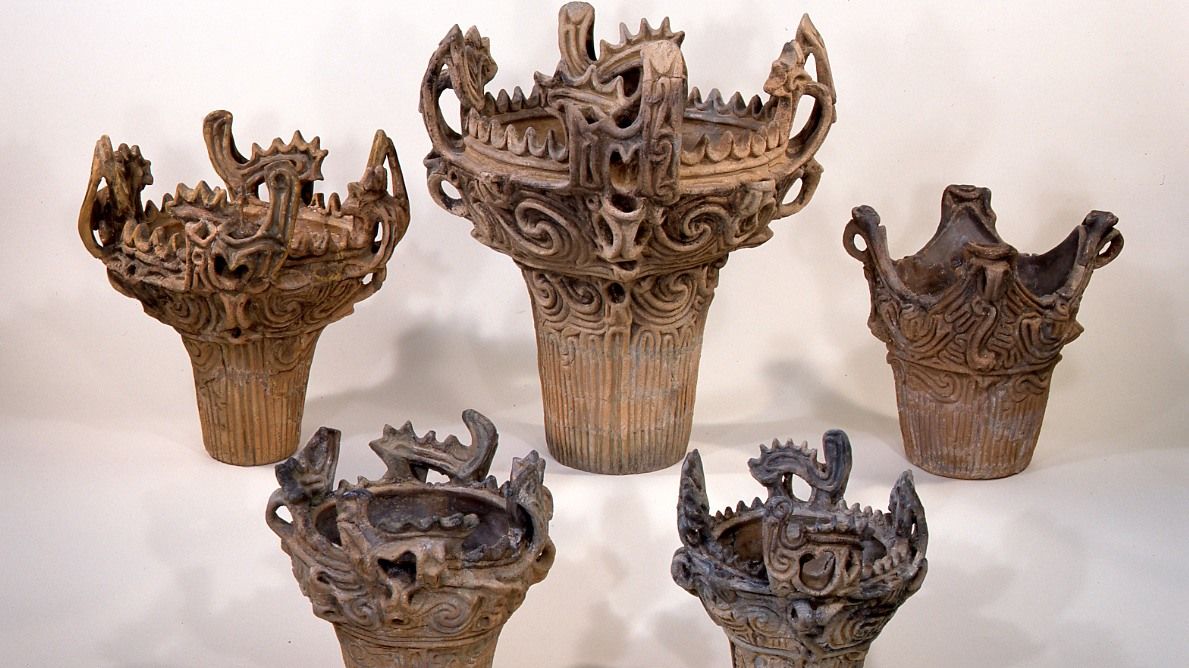
Jōmon pottery, with its distinctive rope-like patterns, is among the oldest in the world — a glimpse into Japan’s prehistoric roots.
Writing Arrives: The Nara Period (710–794 CE)
Fast-forward to the 8th century. Japan’s capital was Nara, Buddhism was booming, and for the first time, the Japanese language got written down.
How? By borrowing Chinese characters (kanji) through Korean scholars and monks. This system, called Man’yōgana, used kanji for their sounds, not meanings.
That’s how we got legendary works like the Kojiki (Records of Ancient Matters) and Man’yōshū (an epic poetry collection). At this point, Japanese even had eight vowel sounds, compared to the five we know today.
But the story was just getting started. The next period would bring two scripts that changed the history of the Japanese language forever.
Scripts That Changed Everything: The Heian Period (794–1185 CE)
And then, the Japanese language truly found its voice. The imperial court loved poetry and elegance — but Man’yōgana was clunky. So out of kanji came two fresh scripts:
- Hiragana – cursive, flowing, widely used in literature and by women
- Katakana – angular, concise, mainly used by monks for scholarly writing
Suddenly, writing Japanese became way more accessible. Women, previously shut out of Chinese character studies, embraced hiragana and produced masterpieces. You might know The Tale of Genji — often called the world’s first novel. It was penned in hiragana by Murasaki Shikibu, a court lady who became a true literary icon.
And just like that, the Japanese language blossomed into the three-script system still used today: kanji, hiragana, and katakana.
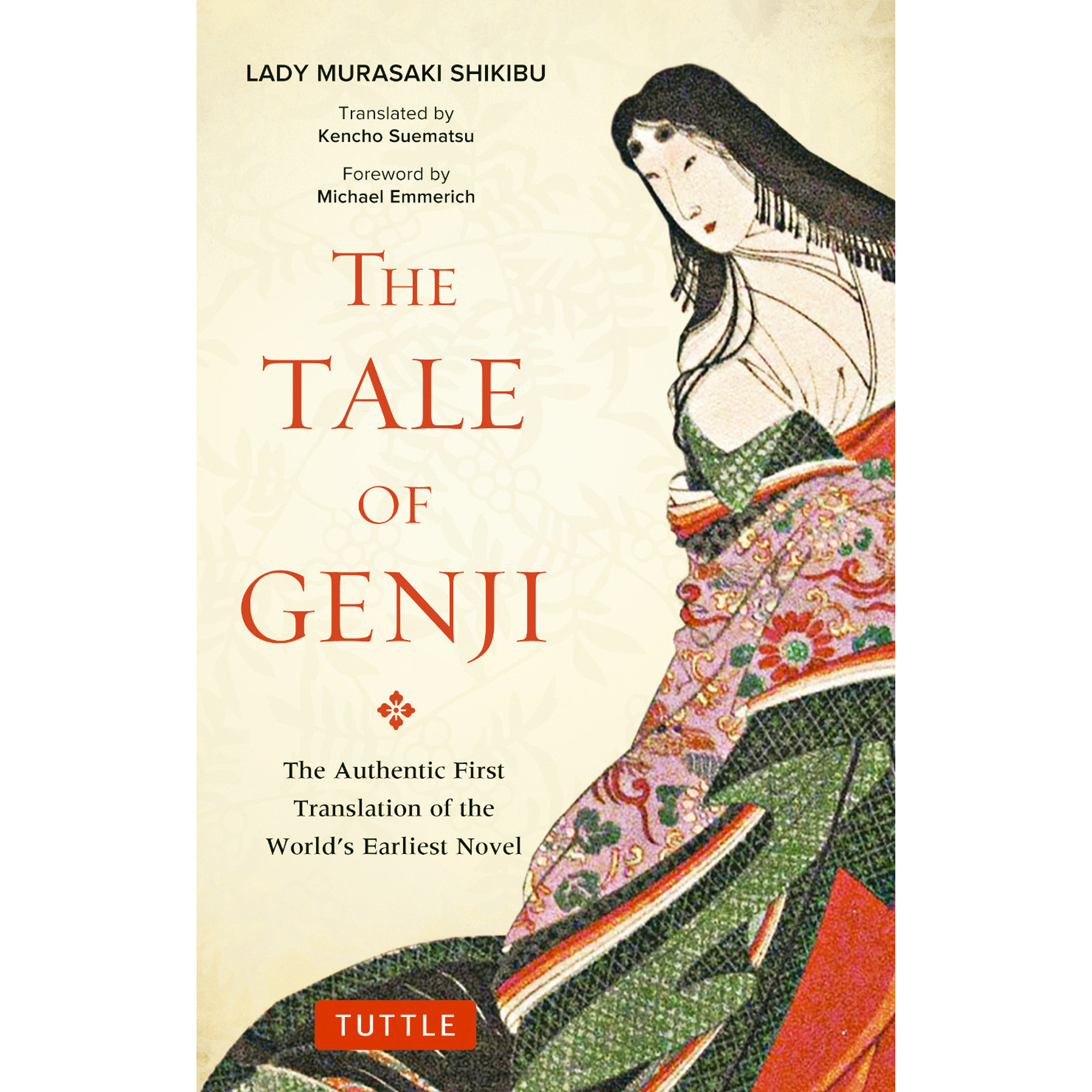
The Tale of Genji, often called the world’s first novel, written in hiragana by court lady Murasaki Shikibu during the Heian period.
Samurai, Dialects… and Bread? (1185–1603 CE)
The age of the samurai brought war, regional division, and a patchwork of dialects. Each region’s version of Japanese grew more distinct.
Then, in the 1500s, the Portuguese arrived seeking trade opportunities. They came with guns, gold, missionaries, and bread. Over time, Japan borrowed Western words like:
- パン (pan) – bread
- タバコ (tabako) – tobacco
Foreign contact gave the Japanese language new vocabulary and even nudged its pronunciation closer to the modern form.
Closed Country: The Edo Period (1603–1868 CE)
The Edo period marked a time of isolation and transformation. Under the Tokugawa shogunate, Japan enforced a strict policy called 鎖国 (sakoku), or “closed country.” Foreigners were banned, overseas travel was forbidden, and even movement within Japan was tightly restricted.
But isolation didn’t mean stagnation. Peace brought stability, and literacy soared. Schools called terakoya opened to commoners, spreading reading and writing skills like never before.
Regional dialects grew stronger thanks to limited travel, but in Edo (modern Tokyo), a common standard began to emerge. By the end of this period, the Japanese language looked strikingly modern: grammar was largely settled, the vowel system had slimmed down to five, and written culture was thriving.
Modern Japanese Language: The Meiji Restoration and Beyond (1868–Today)
The Meiji Restoration of 1868 transformed Japan rapidly. The country modernized with railways, factories, schools, and global trade, and the Japanese language modernized too.
The government promoted Hyōjungo, based on the Tokyo dialect, as the national standard taught in schools and used in public life. At the same time, English loanwords flooded in, written in katakana — words like:
- コンピューター (konpyūtā) – computer
- アイスクリーム (aisukurīmu) – ice cream
- ネット (netto) – internet
This chapter in the history of the Japanese language created a powerful blend of tradition and modern influence, a mix that still shapes it today.
The Japanese Language Today: Global Reach and Cultural Power
Now, the Japanese language is everywhere: in anime, manga, tech labs, game consoles, fashion runways, international business, and robotics labs.
It’s a language of tradition and innovation, constantly reinventing itself with slang, pop culture, and digital trends — proof that even after 2,000 years, it’s still evolving.
The history of the Japanese language shows how centuries of change continue to shape its future.

Akibara District in Tokyo — today a hub of anime, gaming, and technology.
Watch the Full History of the Japanese Language on YouTube
This blog post is just a snapshot of the journey. For the full story (packed into an engaging visual timeline) check out our latest episode of Epic Language Origins, our new YouTube series exploring the origins of the languages we love and learn today.
👉 Watch the full video here: How the Japanese Language Evolved: 2,000 Years in 9 Minutes
Learn the Japanese Language Yourself with Rocket Japanese
Exploring the history of the Japanese language is fascinating, but actually speaking it opens an entirely new world. That’s where Rocket Japanese comes in.
With Rocket Japanese, you’ll go far beyond memorizing vocabulary lists. You’ll:
- Perfect your pronunciation with native-speaker audio and voice recognition tools.
- Practice real conversations through interactive role-plays where you take both sides of the dialogue.
- Build a solid foundation in reading and writing with step-by-step lessons for hiragana, katakana, and kanji.
- Retain what you learn using fun reinforcement activities and an intelligent review system that adapts to your progress.
- Understand Japanese culture so you can use the right phrases in the right situations.
These features turn “textbook Japanese” into authentic communication, the kind that helps you connect, not just translate.
Whether you dream of visiting Japan, connecting with friends, or enjoying anime without subtitles, Rocket Japanese gives you the confidence to live the language — not just study it.
Start your free trial today and discover the best way to learn Japanese online, with the tools, structure, and cultural insights to get you speaking confidently from day one.